With Our Eyes on the Sparrows

A Lenten Learning Community Reflection
“I Know She Watches Me” — Crainshaw

We are approaching the halfway mark of the spring semester, and I want to celebrate the perseverance and resilience of Wake Div students. Zoom conversations in my classes and in other meetings with students have been substantive and thought-provoking.

Thank you, students, for contributing in powerful ways this semester to a vibrant learning community.

Striking to me in particular has been a spirit of wisdom and caring that penetrates through Zoom windows to enliven what we are studying and learning together. The palpable quality of this spirit reminds and calls me to what I consider to be important Gospel work in these days.


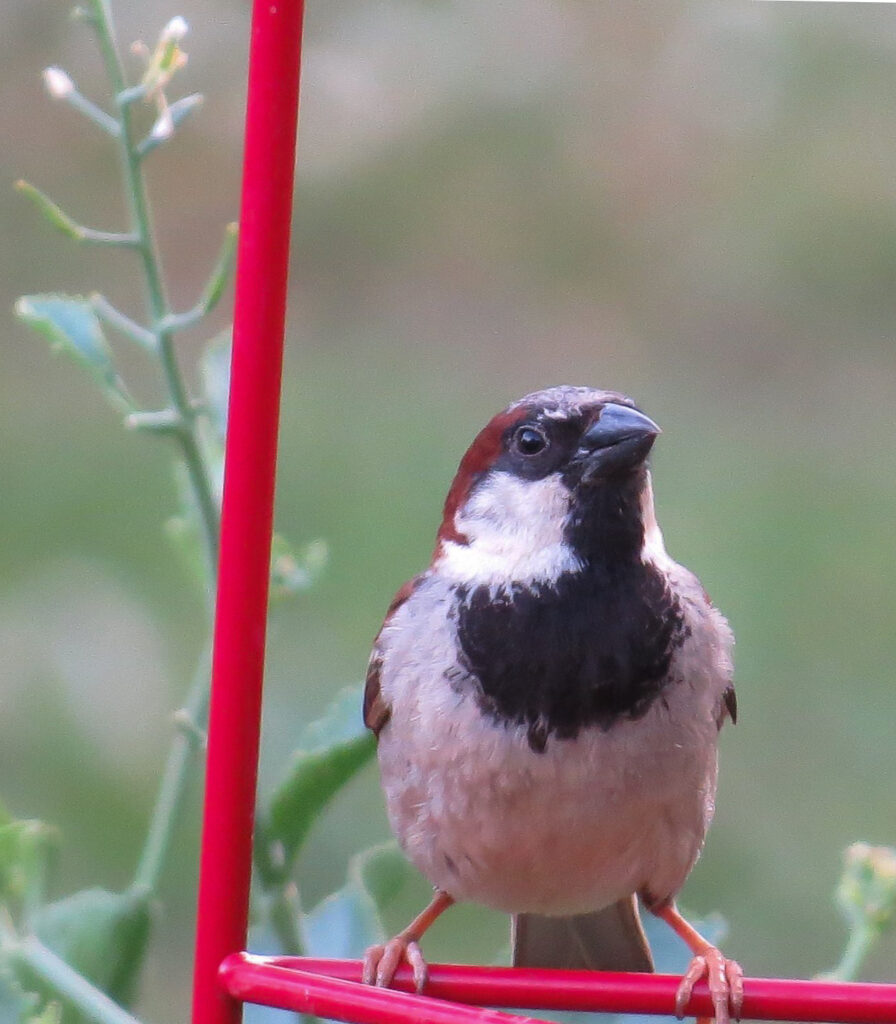
God’s eye is on the sparrow, and I know God watches me.

Civilla D. Martin, 1905

God holds the sparrows and us—each and every one of us humans—in God’s eyes. 

Our local and global human communities face many tests in these Covid-19 crisis moments. A test question I consider most critical to our future flourishing is this:  Will we hold the sparrows in our eyes as we make decisions about numerical bottom lines? 

This question dwells at the heart of what I believe is the Gospel. Perhaps now is our time, as communities of faith, to do what we have not done in Gospel spirit and truth across our collective history. Perhaps now is the time to learn to care for each and every person and in particular for those who have been and are most vulnerable. Perhaps now is the time to keep our eyes on the sparrows and from that vantage point wrestle with the complex moral questions that are arising out of the mist with each new pandemic-plagued day.

In this, for me, nests our hope–that even as God cares for us, we are called to care for each other. Yes, God is calling us in these days–“keep your eyes on the sparrows.” I pray that we will have the wisdom and courage to do just that, in the name of the One who creates, redeems, and sustains us and our world.


With Our Eyes on the Sparrows

keep your eye on the sparrow
she says as she watches my face

sparrows? 

burrowed into church eaves
nesting in the backyard camellia bush

fence picket perchers fussing in
damp dirt behind a too-full raincatcher

no stand-out solo serenades or fiery
flashes like cardinals in springtime

no soaring hawk-winged shadow puppets
sickling dew-drenched summer grass

a copper coin for a pair of sparrows
jesus said as he watched their faces

sparrows?

the creating-one knows every wing-beat
fashions and fastens every feather

delights in each hair on each head
relishes every strand silvered by winter suns

so i watch today as a plucky sparrow
sits on the deck rail and watches me

i imagine being able to fly away—
to escape sorrows gone viral

she nods a gentle blessing
i think i’ll keep my eyes on you
Thrive!

Some thoughts on renewing our lives as we journey through lent

Isaiah 35:1-2 is one of my favorite Lenten texts:

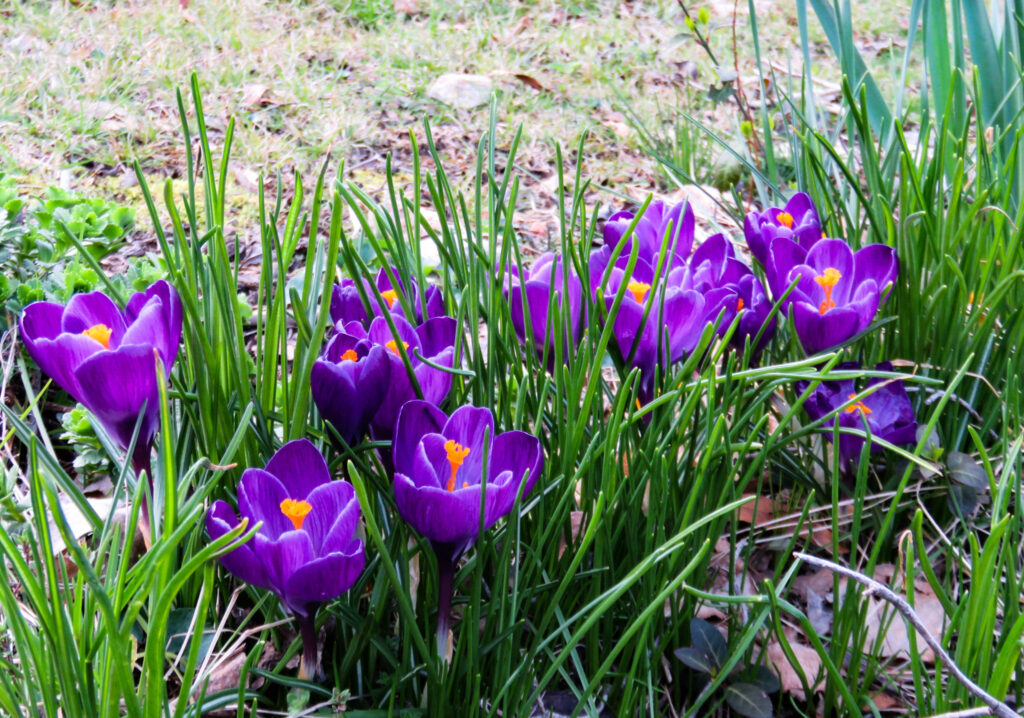
“The wilderness and the dry land shall be glad; the desert shall rejoice and blossom; like the crocus, it shall blossom abundantly, and rejoice with joy and singing.”

As we consider crocus blooms in Lent’s desert places, perhaps we can also imagine new or unexpected ways to continue to thrive in this season of wilderness wa(o)ndering.


Have you ever felt like you want to reboot and reimagine your professional or personal life?

We all experience those spans of time when we realize we need to get unstuck or disentangled from something in order to thrive in our personal and professional lives.

In my work with mid-career professionals, I have learned some strategies for thriving that are valuable for people at any stage of life. Here are five keys to thriving:

T ruth-telling

H umor

R espect

I magination

V oice

E ngagement

Vital to thriving is to become honest about who we are and what we want for our lives. We need to become truth-tellers, in particular about our own desires and needs. While this is serious work, doing it with a sense of humor helps lighten the load. Generous, authentic, and hospitable laughter is a gift. And some of our efforts to get untangled from sticky webs? Humorous.

Respect for self and others is also a gift. And it is essential to thriving.

Respect for self means paying attention to our needs. Respect means listening to our hearts. Respect means affirming our value.

Respect for others is also essential. We do not travel professional roads alone. Hospitality toward co-travelers builds healthy networks of relationship and support.

What do we envision for our lives and relationships when we let loose our imaginations? What possibilities do we see for our workplaces? Imagination and transformation are dance partners in this thriving work.

Again, we have to listen to ourselves if we want to thrive. What is my voice telling me about my life? What wisdom is my voice speaking about my wounds? About the journey ahead?

The beauty and power of listening for my voice? When I pay attention to my most authentic voice, I become more open to hearing the voices of others. We thrive when we engage the people around us in healthy ways. And we contribute to the thriving of others.

I invite you to consider some concrete strategies you have embodied to thrive in your professional and personal lives. You can learn more about these five keys in my fall 2020 publication Thrive: How professionals 55 and over can get unstuck and renew their lives. I am also glad to brainstorm with you and hear your wisdom about thriving. Reach out to me at crainsjy@wfu.edu.

Pancakes and Ashes

Reflections at the Beginning of Lent 2021

Winter Hope; photo by Jill Crainshaw

Pancakes and ashes. What do the two together have to do with the season of Lent? For me the peculiar, juxtaposition of the two in the liturgical year relates to the equally peculiar and powerful juxtaposition of feasting and fasting—and then feasting again—in Christian spiritual life.

Shrove Tuesday

Shrove Tuesday, also called Fat Tuesday, is the last day of carnival or Mardi Gras, a final day of celebration and feasting each year on the edge of the wilderness journey of fasting. During the Middle Ages, Christians “shrove” or sought absolution before the start of Lent. Shrove Tuesday was the last day of “Shrovetide.” Shrove Tuesday is known in some parts of the world today as Pancake Day. On Pancake Day, we eat our feast-fill because, as the Shrove Tuesday text from Ecclesiastes says—“for tomorrow we die.”

Ash Wednesday

Ash Wednesday marks the beginning of Lent. The origins of Ash Wednesday are rooted in the Jewish observance of Yom Kippur, the Day of Atonement. Both Lent and Yom Kippur emphasize fasting and self and communal reflection. Christian worshippers today mark their foreheads with ashes to mark the start of Lent’s 40 days of fasting. Why ashes? In Scripture, ashes symbolize death (Genesis 18:27), judgment (Ezekiel 28:18), lament (Esther 4:3), and repentance (Jonah 3: 6). Ashes are also associated in the bible with fasting (Daniel 9:3 and Isaiah 58:5). Some burial liturgies include the phrase, “ashes to ashes, dust to dust,” spoken as dirt is sprinkled into the gravesite; both the ashes and the dust symbolize the finality of death. Both also symbolize life and growth. Fasting and feasting merge, it seems, as ashes and soil intermingle.

Feasting to fasting to feasting again is a liturgical arc encompassing the Lent/Easter seasons. In Eastern Christian traditions, Lent is called the Great Fast and Easter’s 50 days the Great Feast. During Lent, some traditions bury the Alleluia—we fast from this word of celebration—to enter into spiritual quiet—to let our spiritual soil rebuild for the springtime to come. But this work is not only symbolic or metaphorical spiritual work; it has to do with concrete realities of living in a world where too many people endure fasts that they did not choose. To choose to fast during Lent is a privilege for many of us.

I am struck each spring by the coalescence of Lent’s Great Fast and Easter’s Great Feast with the rhythms of an academic semester. The semester ends this year in the midst of Easter’s 50 days but before we arrive at the Feast we travel the uncertain roads of Lenten wildernesses. Also, Lent 2021 marks the anniversary of the start of pandemic social-distancing and quarantining in the U.S. To undertake this year’s Lenten journey, still battling the realities of Covid-19 and other crises, chaos, and injustices in our communities, all while studying theology and preparing for ministry is both challenging and enlivening. Both the academic and liturgical journeys invite us to consider again our work as religious leaders to bring to fruition Easter’s promises of abundant feasts for all people.

Plotting the Resurrection

Ε. Β. White, author of Charlotte’s Web, writes of his wife Katherine, an avid gardener, who every year in the fall, even in the fall of that year when she knew she likely would not live to see the spring, headed out to the garden to plant bulbs in her garden:

Armed with a diagram and a clipboard, Katharine would get into a shabby old Brooks raincoat much too long for her, put on a wool hat, pull on a pair of overshoes, and proceed to the director’s chair, a folding canvas thing…at the edge of the plot. There she would sit, hour after hour, in the wind and the weather, while Henry produced dozens of brown paper packages of new bulbs and a basketful of old ones, ready for the intricate interment.

As the years went by and age overtook her, there was something comical yet touching in her bedraggled appearance on this awesome occasion. . . her studied absorption in the implausible notion that there would be yet another spring, oblivious to the ending of her own days, which she knew perfectly well was near at hand, sitting there with her detailed chart under those dark skies in dying October, calmly plotting the resurrection.

from E. B. White, “Introduction” in K. S. White, Onward and Upward in the Garden.

So Lent begins. And despite all that is wrong in the world and our uncertainties about what the future holds, we yet again take up the radical Gospel work of plotting the resurrection.

Cultivating Mushroom Vision for Wilderness Times

Sometimes I can’t see what is right in front of me.

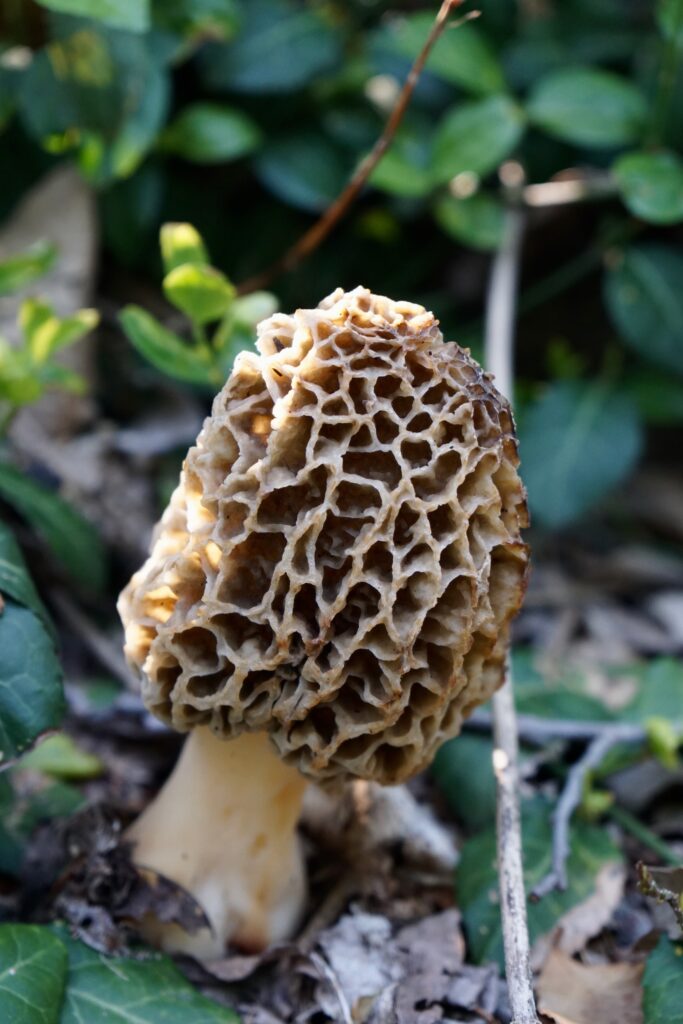
Some friends in Virginia had what I call “mushroom vision.” They loved to hunt for morel mushrooms that grow wild in the woods, and they knew how to spot them among the springtime leaves and undergrowth. This, in my experience, is no easy task. Morels are masterful camouflagers. Often when I ventured out on a mushroom hunt with friends? My shoe was squashing the forest delicacy before I even knew I had “found” it.

Sometimes I can’t see what is right in front of me, and sometimes that is because I don’t know what I’m looking for.

But other times? I think I miss seeing some of life’s gifts because my eyes are focused elsewhere. Or my mind is. Or my heart. Sometimes my perspective is off kilter, or my eyes are just too world-weary to see beyond the stack of work in front of me.

Quarantine and social-distancing days have nudged me to see with a new intensity much beauty around me I have overlooked or taken for granted before. This is an unexpected gift of the pandemic. Birds seem more abundant and full-throated than usual. Last spring, even as the pandemic took hold, my irises were bolder and more loquacious than ever. And I am in awe of the cedar waxwings that feasted on a holly berry buffet in our neighborhood a few weeks ago.

Catching sight of creation’s gifts like these in the midst of wilderness times gives me hope.

What is that hope? My hope is that during uncertain times we—the collective communal we—gain new perspectives on our communities’ amazing gifts. In fact, once we know what we are looking for, perhaps we can see, experience, and celebrate new connections with colleagues, co-workers and community members. Perhaps we can forge unexpected relationships that lead to imaginative ideas for contributing to the flourishing of our communities.

I relish my connections with faculty, staff, and students within the Wake Div community, even if most of those connections these days are through Zoom’s peculiar windows in walls. And I challenge myself this week to make one new connection with someone at Wake Div. Perhaps you will join me and seek out a new connection or partnership in the days ahead.


Fried morel mushrooms, by the way, are a tasty delicacy, if you can find them. Of course, you have to know something about what you are looking for; not all mushrooms result in gastric delights!


Ode to the River Down the Road
           
*written on the occasion of noticing the river in
my neighborhood as if for the first time.

It’s been too long, old friend,
since I last saw you dance—
not because you weren’t moving
but because my ears
were too full of distracting debris
to listen for your music.

Ancient rocks welcome your embrace.
Pebbles laugh in sun-touched delight
as you slip and slide across their backs.
And trees lean in close
to hear you whisper
the secrets rivers keep.

Thank you for continuing
to twist
tumble
turn
to the music of the spheres.

Thank you—
for saving a dance
for me.