With Our Eyes on the Sparrows

A Lenten Learning Community Reflection
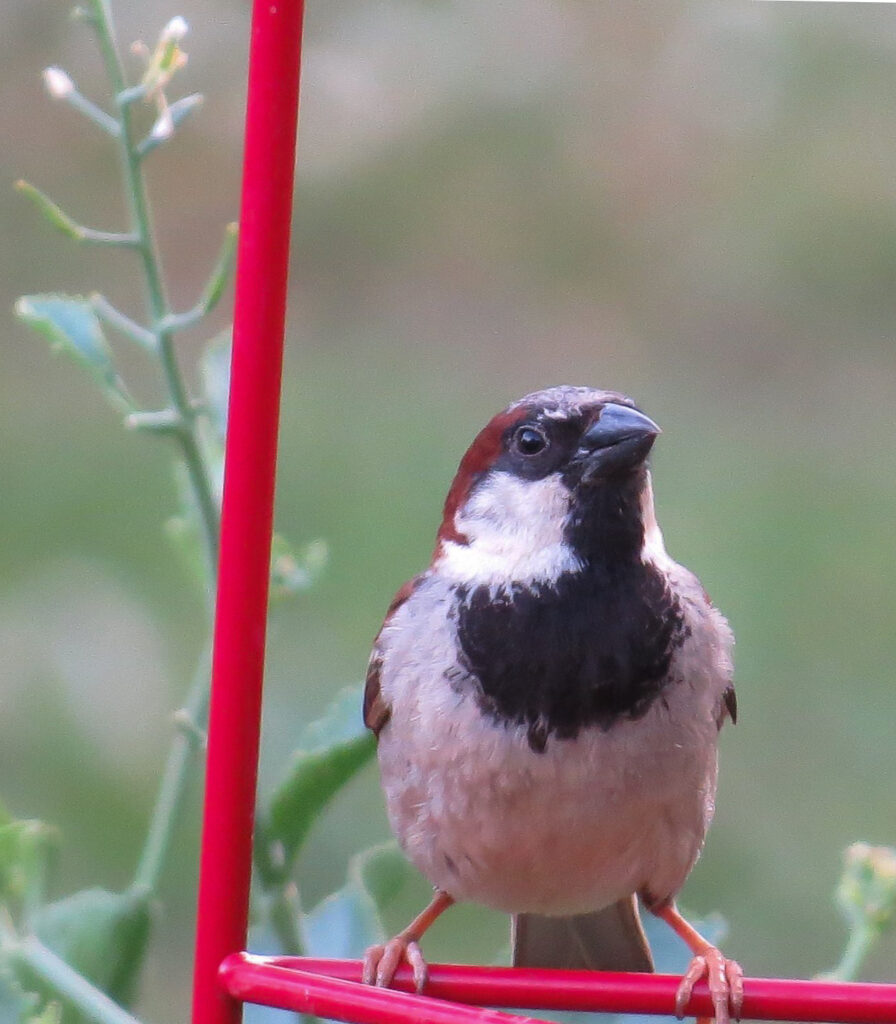
“I Know She Watches Me” — Crainshaw

We are approaching the halfway mark of the spring semester, and I want to celebrate the perseverance and resilience of Wake Div students. Zoom conversations in my classes and in other meetings with students have been substantive and thought-provoking.

Thank you, students, for contributing in powerful ways this semester to a vibrant learning community.

Striking to me in particular has been a spirit of wisdom and caring that penetrates through Zoom windows to enliven what we are studying and learning together. The palpable quality of this spirit reminds and calls me to what I consider to be important Gospel work in these days.


God’s eye is on the sparrow, and I know God watches me.

Civilla D. Martin, 1905

God holds the sparrows and us—each and every one of us humans—in God’s eyes. 

Our local and global human communities face many tests in these Covid-19 crisis moments. A test question I consider most critical to our future flourishing is this:  Will we hold the sparrows in our eyes as we make decisions about numerical bottom lines? 

This question dwells at the heart of what I believe is the Gospel. Perhaps now is our time, as communities of faith, to do what we have not done in Gospel spirit and truth across our collective history. Perhaps now is the time to learn to care for each and every person and in particular for those who have been and are most vulnerable. Perhaps now is the time to keep our eyes on the sparrows and from that vantage point wrestle with the complex moral questions that are arising out of the mist with each new pandemic-plagued day.

In this, for me, nests our hope–that even as God cares for us, we are called to care for each other. Yes, God is calling us in these days–“keep your eyes on the sparrows.” I pray that we will have the wisdom and courage to do just that, in the name of the One who creates, redeems, and sustains us and our world.


With Our Eyes on the Sparrows

keep your eye on the sparrow
she says as she watches my face

sparrows? 

burrowed into church eaves
nesting in the backyard camellia bush

fence picket perchers fussing in
damp dirt behind a too-full raincatcher

no stand-out solo serenades or fiery
flashes like cardinals in springtime

no soaring hawk-winged shadow puppets
sickling dew-drenched summer grass

a copper coin for a pair of sparrows
jesus said as he watched their faces

sparrows?

the creating-one knows every wing-beat
fashions and fastens every feather

delights in each hair on each head
relishes every strand silvered by winter suns

so i watch today as a plucky sparrow
sits on the deck rail and watches me

i imagine being able to fly away—
to escape sorrows gone viral

she nods a gentle blessing
i think i’ll keep my eyes on you

Pancakes and Ashes

Reflections at the Beginning of Lent 2021

Winter Hope; photo by Jill Crainshaw

Pancakes and ashes. What do the two together have to do with the season of Lent? For me the peculiar, juxtaposition of the two in the liturgical year relates to the equally peculiar and powerful juxtaposition of feasting and fasting—and then feasting again—in Christian spiritual life.

Shrove Tuesday

Shrove Tuesday, also called Fat Tuesday, is the last day of carnival or Mardi Gras, a final day of celebration and feasting each year on the edge of the wilderness journey of fasting. During the Middle Ages, Christians “shrove” or sought absolution before the start of Lent. Shrove Tuesday was the last day of “Shrovetide.” Shrove Tuesday is known in some parts of the world today as Pancake Day. On Pancake Day, we eat our feast-fill because, as the Shrove Tuesday text from Ecclesiastes says—“for tomorrow we die.”

Ash Wednesday

Ash Wednesday marks the beginning of Lent. The origins of Ash Wednesday are rooted in the Jewish observance of Yom Kippur, the Day of Atonement. Both Lent and Yom Kippur emphasize fasting and self and communal reflection. Christian worshippers today mark their foreheads with ashes to mark the start of Lent’s 40 days of fasting. Why ashes? In Scripture, ashes symbolize death (Genesis 18:27), judgment (Ezekiel 28:18), lament (Esther 4:3), and repentance (Jonah 3: 6). Ashes are also associated in the bible with fasting (Daniel 9:3 and Isaiah 58:5). Some burial liturgies include the phrase, “ashes to ashes, dust to dust,” spoken as dirt is sprinkled into the gravesite; both the ashes and the dust symbolize the finality of death. Both also symbolize life and growth. Fasting and feasting merge, it seems, as ashes and soil intermingle.

Feasting to fasting to feasting again is a liturgical arc encompassing the Lent/Easter seasons. In Eastern Christian traditions, Lent is called the Great Fast and Easter’s 50 days the Great Feast. During Lent, some traditions bury the Alleluia—we fast from this word of celebration—to enter into spiritual quiet—to let our spiritual soil rebuild for the springtime to come. But this work is not only symbolic or metaphorical spiritual work; it has to do with concrete realities of living in a world where too many people endure fasts that they did not choose. To choose to fast during Lent is a privilege for many of us.

I am struck each spring by the coalescence of Lent’s Great Fast and Easter’s Great Feast with the rhythms of an academic semester. The semester ends this year in the midst of Easter’s 50 days but before we arrive at the Feast we travel the uncertain roads of Lenten wildernesses. Also, Lent 2021 marks the anniversary of the start of pandemic social-distancing and quarantining in the U.S. To undertake this year’s Lenten journey, still battling the realities of Covid-19 and other crises, chaos, and injustices in our communities, all while studying theology and preparing for ministry is both challenging and enlivening. Both the academic and liturgical journeys invite us to consider again our work as religious leaders to bring to fruition Easter’s promises of abundant feasts for all people.

Plotting the Resurrection

Ε. Β. White, author of Charlotte’s Web, writes of his wife Katherine, an avid gardener, who every year in the fall, even in the fall of that year when she knew she likely would not live to see the spring, headed out to the garden to plant bulbs in her garden:

Armed with a diagram and a clipboard, Katharine would get into a shabby old Brooks raincoat much too long for her, put on a wool hat, pull on a pair of overshoes, and proceed to the director’s chair, a folding canvas thing…at the edge of the plot. There she would sit, hour after hour, in the wind and the weather, while Henry produced dozens of brown paper packages of new bulbs and a basketful of old ones, ready for the intricate interment.

As the years went by and age overtook her, there was something comical yet touching in her bedraggled appearance on this awesome occasion. . . her studied absorption in the implausible notion that there would be yet another spring, oblivious to the ending of her own days, which she knew perfectly well was near at hand, sitting there with her detailed chart under those dark skies in dying October, calmly plotting the resurrection.

from E. B. White, “Introduction” in K. S. White, Onward and Upward in the Garden.

So Lent begins. And despite all that is wrong in the world and our uncertainties about what the future holds, we yet again take up the radical Gospel work of plotting the resurrection.

A Covid-19 Advent Season Reflection

Image seen through the Hubble telescope. Check out the Hubble telescope Advent calendar, shared by the Boston Globe.

Cosmologist Brian Swimme’s view of the place of humans in the cosmos strikes for me as valuable as we begin this Covid-19 Advent season.

An interviewer once asked Swimme about his vocation as a writer and teacher. 

“I am just so profoundly happy,” Swimme responded, “serving out the role of the human as the realm in which the Earth reflects upon and tastes its beauty.”

Advent is a liturgical season of anticipating and birthing. Advent is also a time for reflecting on what it means that God became human and dwelt upon the earth. During Advent we anticipate the many ways in which God arrives in our midst. We also celebrate how God dwells upon the earth in us and in the generous gifts of creation.

What does “Advent” bring to us during this perplexing and uncertain season?

To respond to this challenging question, I look to the importance of “place” in religious leadership and theological education:

Effective religious leaders are ministers in place: deeply engaged with the land, history, people and patterns of particular places. They are committed to the health and well-being of their locale and its inhabitants. Through the lens of the particular issues of a place, religious leaders are able to see more vividly the web of connections of the local context with a global environment and global economy.  Leadership in place is a practice, not a set of traits or qualities; leadership is worked out through direct, persistent, active engagement with the needs, hopes, and possibilities of a community.

Jill Crainshaw, in Grounding Education in the Environmental Humanities: Exploring Place-Based Pedagogies in the South (Routledge, 2018).

Poet Maxine Kumin’s insights about poetry and place come to mind:

In a poem, one can use the sense of place as an anchor for larger concerns, as a link between narrow details and global realities. Location is where we start from.

Maxine Kumin

Advent sings, prays, and proclaims the power and possibility of “place” in Christian understanding.

As we enter into Advent this year, I invite you to join me in considering this question: What if place—both its incarnational and resurrectional dimensions—is where theological education, religious leadership, and perhaps even faith begin and to where they return?

“Place” certainly seems to be where the liturgical year begins–with God making a place on earth through the birth of Jesus.

As this fall semester draws to a close, God’s liturgical incarnation rhythms have only just begun. The question with which I began the semester lingers for me and with it Swimme’s idea that the Universe—God’s good earth—somehow comes to taste itself, perhaps even to savor itself, through humans. This Advent and Christmas, as we rest between semesters, may we ponder anew the meaning of humanity’s place, and may we discover new ways to incarnate in our own lives and vocations God’s savoring and saving work.